
Bristol Biomechanics
Hypermobility Support
in Bristol
Hypermobility is often seen as a gift until it becomes a source of daily pain and instability. We help you build the strength and control your body needs to function without limitation.
What Is Hypermobility?
Hypermobility refers to the ability of joints to move beyond their normal range of motion. For some people this presents no issues at all. For others it leads to chronic pain, frequent injuries, joint instability and a significant impact on quality of life.
Hypermobility exists on a spectrum. At one end is generalised joint hypermobility, where joints are simply more flexible than average. At the other end sits Hypermobility Spectrum Disorder and Hypermobile Ehlers-Danlos Syndrome, where the connective tissue throughout the body is affected more broadly.
Regardless of where on the spectrum a person sits, the fundamental challenge is the same: the joints lack the muscular support and control they need to function safely and efficiently.
Why Hypermobility Causes Pain and Instability
In a well-functioning body, muscles work together to support and stabilise the joints throughout movement. In a hypermobile body, the joints move so freely that the surrounding muscles, tendons and ligaments are constantly working overtime to prevent them from moving too far.
This, combined with an overall lack of muscular integrity and strength, leads to long-term postural issues and compression across the spine and joints. Over time, this leads to fatigue, chronic tension, pain and a heightened risk of injury.
Many hypermobile individuals also develop compensatory movement patterns as a result. Without realising it, the body begins to rely on certain muscles and joints in ways they were not designed for, creating imbalances that compound the problem further.
Common difficulties experienced by hypermobile individuals include:
01.
Chronic joint pain across multiple areas of the body
02.
Frequent sprains, strains or dislocations
03.
A feeling of instability or weakness during everyday movement
04.
Fatigue from the constant muscular effort required to stabilise joints
05.
Poor proprioception, meaning a reduced sense of where the body is in space
Our Approach
How We Help People With Hypermobility
Working with hypermobility requires a different approach to working with stiffness or injury. The goal is not to increase flexibility. It is to build the muscular strength, coordination and control that the joints need to move safely and confidently. This is why the right exercise for hypermobility looks very different to conventional gym or physiotherapy programmes.
At Bristol Biomechanics, we use Functional Patterns, a methodology built around the fundamental movements of the human body: standing, walking, running and throwing. By assessing your posture and full movement cycle, we identify where your body is compensating, where control is lacking and where the greatest gains in stability can be made.
Our approach includes:
01
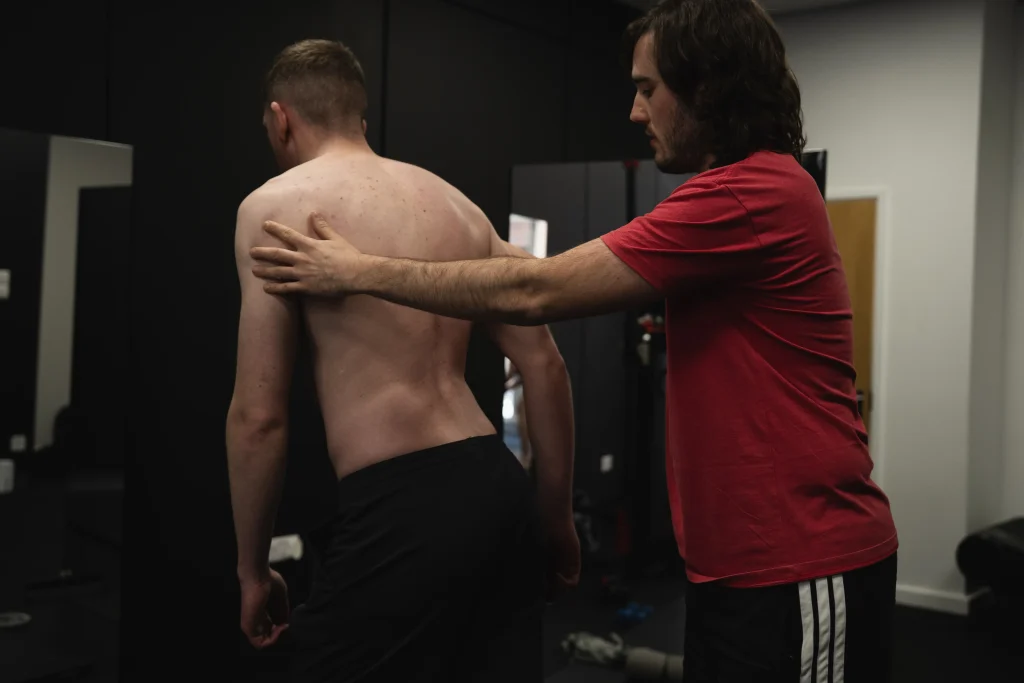
Postural and Gait Assessment
We begin with a thorough analysis of your posture and movement to understand exactly how your hypermobility is affecting your body and where the priority areas for improvement are.
02
Myofascial Release (MFR)
We teach you targeted self-massage techniques to release the areas of chronic tension and overuse that have developed as a result of your hypermobility, restoring balance and preparing your body for corrective exercise.
03
Corrective Exercise
Hypermobility exercise done correctly is about control, not flexibility. Using Functional Patterns corrective exercise, you will learn to engage your muscles as a connected and coordinated system, building genuine stability around your joints and developing the movement control your body needs to function without pain.
04
Lifestyle and Wellbeing Support
We take a holistic approach covering nutrition, sleep quality, stress management and reducing systemic inflammation, all of which play an important role in managing hypermobility and supporting long-term joint health.
Getting Started
What to Expect From Your First Session
01
Step one
Book a Call
Your journey begins with a free phone consultation. We will take the time to understand your situation, discuss your symptoms and determine whether we are the right fit for you.
02
Step two
Free Initial Consultation
Your first session is a full one-hour assessment. We will analyse your posture and movement, identify the specific patterns and compensations your hypermobility has created and walk you through exactly how we plan to address them. You will also experience corrective exercise first-hand so you can feel the difference from the very first session.
03
Step three
Your Personalised Programme
From there, we build a programme tailored specifically to your body and your needs. Whether you join us in person at our Bristol studio or work with us online from home, you will have weekly guidance, video feedback and direct access to your coach throughout your journey.
Ready to Take Control of Your Hypermobility?
Hypermobility does not have to mean a lifetime of pain and limitation. With the right approach, your body can become stronger, more stable and more resilient than you may think possible.